Vein Clinic Billing 2026: Medical Necessity vs. Cosmetic Exclusion
Why the Same Ablation Procedure Is Covered for One Patient and Self-Pay for the Next, and What Your Chart Has to Show to Prove It
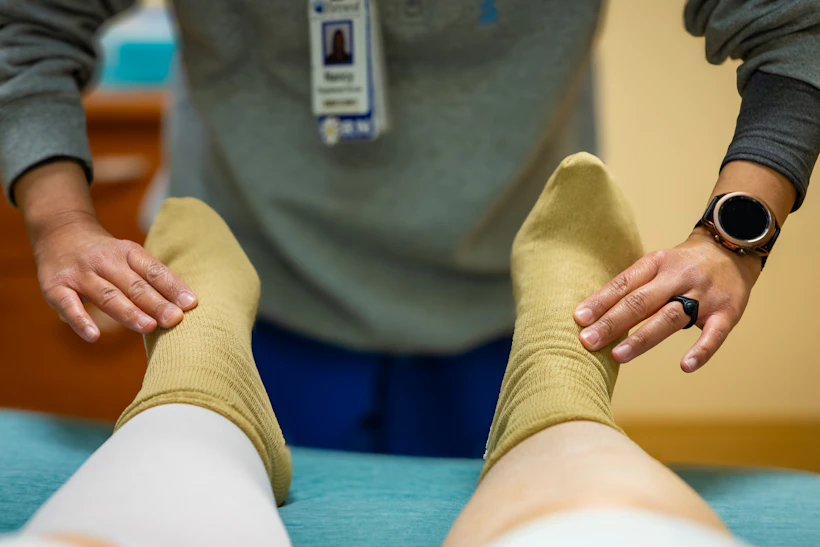
In March 2026, an Arizona cardiology group and three of its physicians agreed to pay $4.75 million to resolve allegations that they billed Medicare for vein ablations on perforator veins that, according to the government, didn't qualify for treatment under accepted standards of medical practice. The government's theory wasn't that the procedures never happened. It was that the chart didn't actually support what the claim said it supported: reflux duration, vein diameter, symptoms, and a documented conservative therapy trial. That's the entire billing problem in one specialty, compressed into a single settlement.
Vein clinics sit on a line most other specialties don't have to worry about. The exact same procedure, on the exact same vein, can be a covered medical service or a cosmetic one the patient pays for out of pocket, and the only thing that separates them is documentation. Get the chart wrong and you're not just risking a denial. You're generating the kind of claims pattern that shows up in a Recovery Audit Contractor review three years later.
Why Payers Split Vein Treatment Into Two Buckets
Every major payer draws the same basic line: varicose veins treated because they hurt, bleed, ulcerate, or otherwise interfere with a patient's daily life are a covered medical problem. Varicose veins treated because the patient doesn't like how they look are cosmetic, full stop, and no amount of correct coding turns a cosmetic claim into a paid one. The clinical tool payers lean on to tell the two apart is the CEAP classification system (Clinical, Etiology, Anatomy, Pathophysiology) paired with the Venous Clinical Severity Score, or VCSS, which turns symptoms like pain, edema, and skin changes into a number a reviewer can check against a threshold.
That distinction is also why vein clinics see a disproportionate share of medical-necessity denials compared to other procedural specialties. A dermatology practice billing a lesion excision rarely has to prove the excision wasn't cosmetic. A vein clinic has to prove it on nearly every ablation, every time, because the alternative, elective cosmetic treatment, is a real and common reason patients walk through the door.
The Codes You're Actually Billing
Vein treatment splits across two families of CPT codes depending on technique, and mixing them up is one of the more common, and more expensive, errors a vein clinic coder makes.
| CPT Code | What It Covers |
|---|---|
| 36465 / 36466 | Injection of non-compounded foam sclerosant into a truncal vein, with or without ultrasound guidance (single vs. multiple veins) |
| 36468 / 36470 / 36471 | Sclerotherapy of other (non-truncal) veins, liquid or foam |
| 36475 / 36476 | Endovenous radiofrequency ablation, first vein treated (36475) and each additional vein via separate access in the same extremity, same session (36476, add-on) |
| 36478 / 36479 | Endovenous laser ablation, first vein treated (36478) and each additional vein via separate access, same extremity, same session (36479, add-on) |
| 76937 | Ultrasound guidance for vascular access, separately identifiable from the procedure guidance already bundled into the ablation codes |
Add-on codes 36476 and 36479 can only be billed once per extremity per session, each through its own separate access site, not once per additional vessel segment treated through the same puncture. That distinction trips up coders who are used to per-segment billing logic from other vascular procedures, and it's an easy denial to trigger if your charge ticket doesn't force the access-site distinction explicitly.
The Conservative Therapy Trial Payers Actually Require
Here's where a lot of billing guides get it wrong, and it's worth getting right because it changes how long you tell patients to wait before scheduling a procedure. Under First Coast Service Options' LCD L38720, the Medicare Administrative Contractor covering Florida, Puerto Rico, and the Virgin Islands, the required conservative therapy trial is 2 to 4 weeks, not the 6 weeks you'll see cited in some vendor blogs. The trial has to include graduated compression of 20-30 mmHg or greater, a daily ambulation plan, periodic leg elevation, and avoiding prolonged sitting or standing, and the chart needs to document that the patient tried it and stayed symptomatic anyway.
- Document the trial itself, not just that you recommended it. "Compression stockings prescribed" isn't the same as a note showing the patient wore them for a defined period and remained symptomatic.
- Know the waiver conditions. Under L38720, the trial requirement is waived if the patient's VCSS is 6 or higher, they have C4-C6 disease (skin changes, healed or active ulceration), active hemorrhage from a varicosity, or recurrent superficial thrombophlebitis. Document which waiver applies if you're skipping the trial.
- Check your own MAC's LCD before you copy this number. LCDs are written contractor by contractor. The trial length, the compression pressure, and the waiver list can all differ outside Jurisdiction N.
Duplex Ultrasound and the Reflux Threshold
Medical necessity for ablation also depends on an objective finding, not just symptoms: duplex ultrasound evidence of venous reflux. Under L38720, that means reversed venous flow of 500 milliseconds or greater in the saphenous or perforator veins, confirmed with provocative maneuvers, plus documented absence of deep venous obstruction. The ultrasound itself has to be a formal, interpreted duplex scan of both the deep and superficial systems, not a quick bedside look, and the plan of care built from it needs to identify every site of clinically significant reflux the physician intends to treat, not just the one vein scheduled for this session.
Reflux thresholds vary by contractor. L38720 doesn't specify a separate millisecond threshold for deep vein reflux beyond requiring absence of deep venous obstruction. Other MAC LCDs structure this differently, with their own thresholds for deep versus superficial reflux, so pull the specific LCD your billing jurisdiction uses rather than assuming one number applies nationally. There is no national coverage determination for varicose vein treatment, which is exactly why this varies.
OIG and Audit Exposure: What Auditors Are Actually Checking
Vein ablation sits on CMS's own list of Recovery Audit Program approved review topics, Topic 0145, covering CPT 36475, 36476, 36478, 36479, and 76937 for ambulatory surgical center and professional claims across all Medicare Administrative Contractor jurisdictions. It's a complex review, meaning a human reviewer reads the chart rather than a system flag alone, and the review window excludes any claim with a paid date more than three years before the auditor's request letter, which is the practical version of the 36-month lookback you'll hear referenced across Medicare program integrity work generally.
The documentation gaps CMS's own reviewers are instructed to check for read like a checklist of exactly what gets a vein clinic denied, and then audited: insufficient documentation that conservative therapy failed, no history and physical findings supporting symptomatic varicose veins, missing documentation that an aneurysm was ruled out in the treated segment, insufficient proof the vein diameter parameters were met, no note on thrombosis or vein tortuosity, insufficient documentation confirming the location of incompetent perforating veins, and no documentation ruling out other causes of the patient's edema, ulceration, or pain.
What makes this specialty's exposure distinct from a typical coding-error audit is that the underlying clinical judgment, whether a vein actually needed treatment, is exactly what gets scrutinized. A missing modifier gets you a denial and a resubmission. A pattern of ablations on veins that don't meet the diameter, reflux, or conservative-therapy criteria in the chart gets you a program integrity referral, because it looks less like a billing mistake and more like a medical necessity problem repeated across a patient panel.
Your 90-Day Documentation Checklist
Treat every ablation as the start of a 90-day episode of care, not a single billable event, because that's how the LCD framework is actually built. The plan of care needs a documented history and physical exam, the CEAP classification, the VCSS score, and a formal venous duplex scan on file before the procedure is scheduled, not reconstructed afterward if a payer asks.
If you're planning serial ablations on the same leg within that 90-day window, the chart needs patient-specific clinical reasoning for why the veins couldn't be treated in a single session, not a generic note. And if incompetent perforator veins are part of the plan, document the specific tests that confirmed their presence and location; a general statement that perforators were "noted on exam" won't satisfy a reviewer checking against the LCD's own criteria. Build a pre-procedure checklist your front desk and clinical staff both use before a case is scheduled, not one your coder reaches for after a denial lands.
Free Download: The 10-Point RCM Health Check
The billing gaps most practices don't catch until they show up as denials. Get the checklist: free, no spam.
✓ Got it! Your info is saved: view the checklist now →
We don't share your info. Unsubscribe any time.
Not Sure Your Vein Clinic Documentation Would Hold Up?
RCMAXIS reviews your ablation charts against your MAC's actual LCD criteria before a payer or an auditor does it for you.
Get Your Free Revenue AssessmentFrequently Asked Questions About Vein Clinic Billing
How long does a patient need to try conservative therapy before vein ablation is covered?
Under First Coast Service Options' LCD L38720, which covers Florida, Puerto Rico, and the Virgin Islands, the conservative therapy trial is 2 to 4 weeks of graduated compression (20-30 mmHg or greater), ambulation, leg elevation, and avoiding prolonged sitting or standing, not the 6 weeks some billing guides claim. The trial requirement is waived if the patient's Venous Clinical Severity Score is 6 or higher, they have C4-C6 disease, active hemorrhage, or recurrent superficial thrombophlebitis. Confirm the exact trial length and waiver conditions in your own MAC's LCD, since these vary by jurisdiction.
What reflux duration does duplex ultrasound need to show for vein ablation to be medically necessary?
Under LCD L38720, reversed venous flow (reflux) of 500 milliseconds or greater in the saphenous or perforator veins, confirmed with provocative maneuvers on duplex ultrasound, plus absence of deep venous obstruction, supports medical necessity. Some other MAC LCDs apply a higher threshold for deep vein reflux specifically, so check the reflux duration your own jurisdiction's LCD requires before relying on this number.
Can a vein clinic bill CPT 37241 for endovenous ablation?
No. CMS's billing and coding article for chronic venous insufficiency treatment states directly that CPT 37241 is not appropriate for reporting vein ablation for chronic venous insufficiency and is considered incorrect coding. The correct codes are 36475 or 36478 for the first vein treated, with add-on codes 36476 or 36479 for each additional vein treated through a separate access site in the same extremity and session.
Related Resources
References
- Centers for Medicare & Medicaid Services. Billing and Coding: Treatment of Chronic Venous Insufficiency of the Lower Extremities (A58250). cms.gov/medicare-coverage-database/view/article.aspx?articleid=58250
- Centers for Medicare & Medicaid Services. Local Coverage Determination: Treatment of Chronic Venous Insufficiency of the Lower Extremities (L38720). cms.gov/medicare-coverage-database/view/lcd.aspx?lcdId=38720
- Centers for Medicare & Medicaid Services. Approved RAC Topic 0145: Endovenous Radiofrequency Ablation and Endovenous Laser Treatment for Lower Extremity Varicose Veins. cms.gov/.../approved-rac-topics/0145-endovenous-radiofrequency-ablation
- Office of Inspector General, U.S. Department of Health and Human Services. Arizona Cardiology Group To Pay $4.75M To Resolve Allegations of Unnecessary Vein Ablations. oig.hhs.gov/fraud/enforcement/arizona-cardiology-group-to-pay-475m
- Office of Inspector General, U.S. Department of Health and Human Services. Las Vegas Surgical Associates Agreed To Pay $20,000 for Allegedly Violating the Civil Monetary Penalties Law. oig.hhs.gov/fraud/enforcement/las-vegas-surgical-associates-agreed-to-pay-20000
- Office of Inspector General, U.S. Department of Health and Human Services. Center for Vascular Medicine Agreed To Pay $107,461.50 for Allegedly Violating the Civil Monetary Penalties Law. oig.hhs.gov/fraud/enforcement/center-for-vascular-medicine-agreed-to-pay-107000
- Office of Inspector General, U.S. Department of Health and Human Services. Decatur Vein Clinic Agreed To Pay $140,000 for Allegedly Violating the Civil Monetary Penalties Law. oig.hhs.gov/fraud/enforcement/decatur-vein-clinic-agreed-to-pay-140000