Compounded GLP-1 Billing: The Compliance Risk Your Practice Can't Ignore in 2026
FDA's Enforcement Wave, the 503B Bulks Exclusion Proposal, and What Both Mean for Every Claim Tied to a Compounded Semaglutide or Tirzepatide Dose
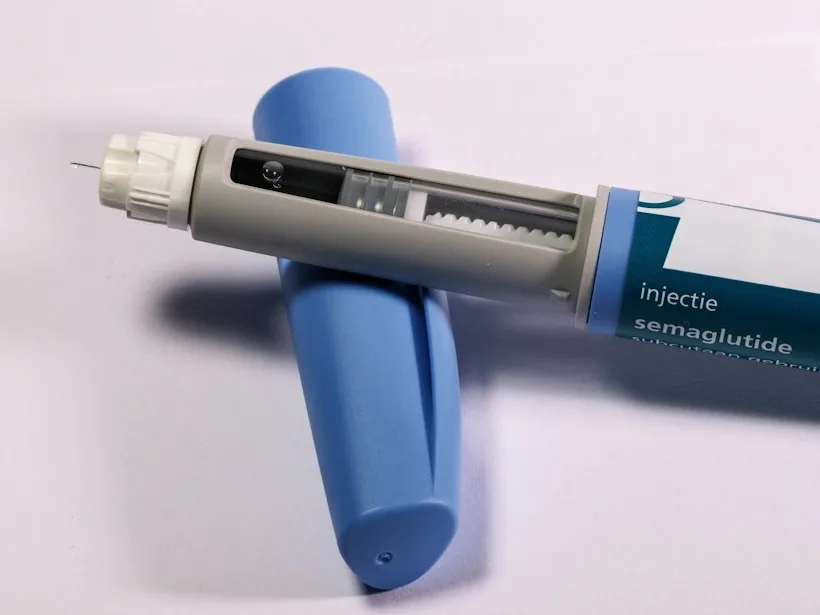
On February 5, 2026, Hims & Hers launched a compounded oral semaglutide pill priced at $49 a month, undercutting Novo Nordisk's branded Wegovy pill. Two days later, HHS General Counsel Mike Stuart announced his office had referred the company to the Department of Justice for potential violations of the Food, Drug, and Cosmetic Act. Hims pulled the product the same day. That's how fast this moved, and it's only one data point in a much bigger pattern: FDA has now sent 88 warning letters since September 2025 to telehealth firms and compounders over misleading compounded GLP-1 marketing, 30 of them in a single batch announced March 3, 2026.
If your practice bills insurance, Medicare, or even just a patient's HSA for a compounded semaglutide or tirzepatide dose, this isn't a marketing story anymore. It's a billing compliance question, and the exposure sits with the prescriber and the biller, not just the compounding pharmacy. A Maryland compounding pharmacy found that out directly in March 2026, settling a False Claims Act suit over compound-drug claims it submitted to Medicare and TRICARE. Civil penalties for a false claim run $14,308 to $28,619 per claim as of the Department of Justice's current inflation-adjusted range, on top of treble damages for whatever the government actually paid out. That's per claim, not per case.
Why Compounded GLP-1s Create a Different Billing Problem Than Branded Ones
Branded GLP-1s like Ozempic, Wegovy and Zepbound each carry a National Drug Code tied to an FDA-approved product, which is what lets a pharmacy benefit or medical benefit claim process cleanly. A compounded version, made by mixing the active ingredient to a prescriber's specifications, has no such NDC. That single fact is the root of almost every billing problem that follows. Practices that administer compounded doses in-office often end up billing an unclassified drug code, J3490 or J3590, with no NDC and no clean price basis attached. An unclassified code with a vague or inflated charge is exactly the kind of line item a payer's claims-edit system, or a RAC auditor, is built to flag.
The supply side matters just as much as the billing code. Compounding runs through two very different legal pathways: a 503A pharmacy compounds a specific prescription for a specific named patient under state board of pharmacy rules, while a 503B outsourcing facility compounds in bulk under federal oversight and can ship product without a patient-specific prescription already in hand. Most of the telehealth and medical spa volume that scaled during the 2022 to 2024 GLP-1 shortage years ran through 503B bulk supply, because it's cheaper and faster than one-off 503A compounding. That's precisely the pathway FDA is now moving to shut down for these three drugs.
The Enforcement Wave Billing Teams Need to Track
The Hims & Hers episode is the highest-profile example, but it's one beat in a much longer sequence. FDA's warning-letter campaign against compounded GLP-1 marketing started in September 2025 and has run in escalating waves since. The March 2026 batch of 30 letters targeted telehealth companies specifically, citing unsubstantiated claims that compounded products matched FDA-approved drugs, nonsterile manufacturing conditions at some source facilities, and incorrect labeling of active pharmaceutical ingredients. One letter cited three patients sent to the emergency room after taking a compounded product from a single manufacturer. Firms got 15 business days to correct the violations before FDA considers seizures or injunctions.
Here's the part that should matter to a billing office specifically: the same comparability language FDA is citing in warning letters, claims that a compounded product is equivalent to the approved drug, often shows up verbatim in the patient-facing consent forms and intake materials practices use to justify administering (and sometimes billing for) the compounded version in the first place. If your own marketing or consent language claims equivalence to Wegovy or Zepbound, you're using the exact framing FDA has already flagged as misleading in 88 separate letters. That's not just a marketing liability anymore; it undercuts the medical-necessity story a biller would need to defend any claim tied to that patient's treatment.
OIG and DOJ Audit Exposure Reaches the Practice, Not Just the Compounder
OIG hasn't published a dedicated Work Plan item for compounded GLP-1 billing yet, and that's worth saying plainly rather than inventing a citation that doesn't exist. But DOJ doesn't need a Work Plan item to act. False Claims Act cases run through U.S. Attorneys' offices and, just as often, through whistleblower relators who file under seal and let DOJ decide whether to intervene. Compounding-pharmacy fraud is a well-worn enforcement lane: DOJ settled a $21.36 million case against a compounding pharmacy, two of its executives and its private equity owner over a kickback scheme tied to pain and scar creams, a $775,000 case against Vital Life Institute in Florida over a referral kickback scheme for TRICARE and Medicare compound prescriptions, and a $365,000 case against a Georgia compounding pharmacy over compounded-medication claims. The pattern across all of them is the same: inflated or unjustified billing for a compounded product, often paired with a kickback arrangement steering volume to a specific pharmacy. 2026 is the first year that exact pattern has pointed at GLP-1s specifically.
The standard 36-month lookback applies here the same way it applies to any other claims audit, and that's the detail practices tend to underestimate. If your practice has been administering or billing compounded semaglutide or tirzepatide since the shortage years, every claim inside that window is in scope, even though regulatory attention on this specific drug category only became visible in 2026. Waiting for a dedicated OIG audit announcement before cleaning up your billing pattern means waiting for an event that may never happen before the exposure becomes a problem.
- Pull every compounded GLP-1 claim from the last 36 months. Check the billing code, the NDC or lack of one, and whether the charge has a documented cost basis.
- Audit your patient consent and marketing language for comparability claims. "Equivalent to Wegovy" or similar phrasing is the exact framing FDA has flagged as misleading in its warning letters.
- Confirm which pathway your compounding source actually uses. A 503B facility relying on bulk semaglutide, tirzepatide or liraglutide may lose that legal basis entirely once FDA's May 2026 proposal is finalized.
- Review any referral or revenue-sharing arrangement with a compounding pharmacy or telehealth platform. That's the exact fact pattern behind several seven-figure DOJ settlements.
What a Defensible Compounded-GLP-1 Billing Workflow Actually Requires
Most practices are better off treating compounded GLP-1s as cash-pay only and never submitting a claim to Medicare, Medicaid or a commercial payer for them at all. That's not caution for its own sake; it reflects how narrow the legitimate billing path actually is. A compounded-drug claim is only defensible when there's a documented, patient-specific reason the FDA-approved product doesn't work for that particular patient: a genuine allergy to an inactive ingredient in the branded formulation, a need for a strength or delivery route the manufacturer doesn't commercially offer, or a similarly specific clinical fact, not cost, convenience, or a shortage FDA already considers resolved for most strengths.
If a practice does bill a compounded GLP-1 claim, the documentation has to do real work. Keep a current copy of the compounding pharmacy's state license (503A) or FDA registration (503B) on file. Retain the NDC or lot documentation for the bulk substance the pharmacy used, not just an invoice total. Have the prescriber write a specific, patient-level note explaining why the approved product is medically unsuitable for this patient, not a templated line copied across every chart. And never let billing staff submit an unclassified drug code, J3490 or J3590, without an actual invoice-backed cost figure behind it; a round, unsupported charge on an unclassified code is one of the easier patterns for a payer's claims-edit system to catch.
Our GLP-1 and obesity medicine billing guide covers how to bill the FDA-approved drugs correctly, including J-code selection and medical versus pharmacy benefit routing, and our medical spa billing guide covers the broader compliance patterns many weight-loss and aesthetics practices need alongside this one.
Offering Compounded GLP-1s Without a Compliance Review?
Rcmaxis audits your documentation, billing codes and compounding-pharmacy arrangements against the current enforcement landscape, before a payer or a whistleblower does it for you.
Get Your Free Revenue AssessmentFrequently Asked Questions About Compounded GLP-1 Billing
Can my practice bill Medicare or insurance for a compounded GLP-1 drug?
Almost never, and it shouldn't be your default model. Compounded semaglutide and tirzepatide lack an NDC tied to an FDA-approved product, so Medicare Part B and D, and most commercial payers, won't reimburse them the way they reimburse Wegovy, Ozempic or Zepbound. A claim is only defensible when there's a documented, patient-specific reason the FDA-approved product is medically unsuitable, not cost, convenience or a shortage that FDA considers resolved.
What's the difference between 503A and 503B compounding, and why does it matter for billing?
A 503A pharmacy compounds a specific prescription for a specific named patient under state pharmacy law. A 503B outsourcing facility compounds in bulk under federal rules and can sell without a patient-specific prescription in hand. FDA's May 2026 proposal would exclude semaglutide, tirzepatide and liraglutide from the 503B bulk drug substances list entirely, which would cut off the bulk-compounded supply chain many telehealth and medical spa billing models depend on.
What's the False Claims Act penalty risk for billing a compounded drug incorrectly?
Civil penalties run $14,308 to $28,619 per false claim as of the Department of Justice's 2025 inflation adjustment, held flat for 2026, on top of treble damages for whatever the government actually paid. That's per claim, not per case, so a pattern of claims across a patient panel compounds quickly. A Maryland compounding pharmacy's March 2026 settlement over false compound-drug claims to Medicare and TRICARE shows DOJ is actively pursuing this exact theory right now.
Related Resources
Free Download: The 10-Point RCM Health Check
The billing gaps most practices don't catch until they show up as denials. Get the checklist: free, no spam.
✓ Got it! Your info is saved: view the checklist now →
We don't share your info. Unsubscribe any time.
References
- U.S. Food and Drug Administration. List of Bulk Drug Substances for Which There Is a Clinical Need Under Section 503B (Proposed Rule, 91 FR 23431, Docket FDA-2018-N-3240). govinfo.gov/content/pkg/FR-2026-05-01/html/2026-08552.htm
- BioSpace. FDA Sends 30 Warning Letters To Continue Clampdown on Compounded GLP-1s. biospace.com/fda/fda-sends-30-warning-letters
- 247wallst.com. FDA and HHS Hammer Hims & Hers In Compounded Drug Crackdown. 247wallst.com/investing/2026/02/07
- Bloomberg Law. Maryland Pharmacy, Whistleblower Settle Drug Fraud Lawsuit. news.bloomberglaw.com/federal-contracting/maryland-pharmacy
- U.S. Department of Justice. Compounding Pharmacy, Two of Its Executives and a Private Equity Firm Agree to Pay $21.36 Million. justice.gov/opa/pr/compounding-pharmacy-settlement
- U.S. Department of Justice. Florida Compounding Pharmacy and Its Owners to Pay at Least $775,000 to Resolve False Claims Act Allegations. justice.gov/archives/opa/pr/florida-compounding-pharmacy
- Federal Register. Civil Monetary Penalty Inflation Adjustment (Department of Justice). federalregister.gov/documents/2025/01/13/2025-00472
- U.S. Food and Drug Administration. FDA Warning Letters Database. fda.gov/warning-letters