Skin Substitute Billing 2026 (Q4xxx, 15271-15278)
What Changed When Medicare Stopped Paying Skin Substitutes Like Drugs
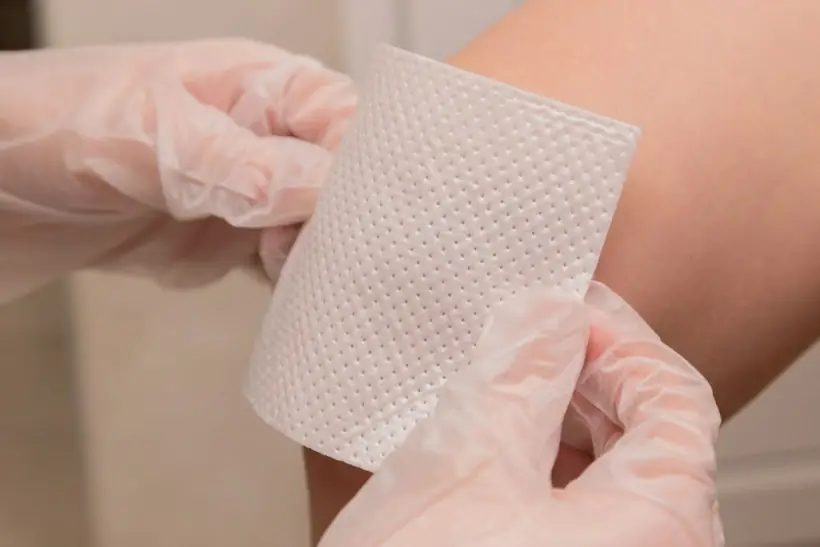
A 20 square centimeter graft in the office now pays about $2,703 under Medicare: $2,545 for the product at $127.26 per square centimeter, plus $158 for the application under CPT 15271. A year ago the same product could have paid more than $1,000 per square centimeter or less than $100, depending on which brand you chose. That spread is gone, and so is most of the margin that made skin substitutes a billing problem.
Skin substitute billing is now simpler to price and harder to defend. Medicare spending on these products grew from $252 million in 2019 to more than $10 billion in 2024, and every auditor in the program knows it. A claim that was routine in 2023 gets read differently today.
Here's how payment works in 2026, which codes carry the money, where prior authorization applies, and the documentation that holds up when someone reviews the chart.
Skin Substitute Billing in 2026: The Flat Per-Square-Centimeter Rate
The CY 2026 Physician Fee Schedule final rule (CMS-1832-F) took effect January 1, 2026 and changed how Medicare treats these products. They're no longer paid as separately priced biologicals with a rate set by each manufacturer's average sales price. They're paid as incident-to supplies used during a covered application procedure, at a single rate per square centimeter.
In the physician office, CMS's October 2026 fee schedule file prices every one of the 290 skin substitute codes in the Q4 series at $127.26 per square centimeter. Hospital outpatient departments follow a parallel structure: CMS grouped the products by FDA regulatory category (361 human cells, tissues and cellular and tissue-based products, 510(k) devices and premarket approval products) under separate payment groups, and paid them at one rate for 2026. CMS has said it intends to propose different rates by category in future years.
What this means is that the product you choose no longer changes the payment. The decision should be clinical, and your billing system should stop treating the Q code as a price lever.
Application Codes: Where the Rest of the Payment Comes From
The product is half the claim. The application procedure is billed separately with CPT 15271 through 15278, selected by body area, patient age and size of the wound. At 2026 national rates in the office, 15271 (first 25 square centimeters, trunk, arms or legs) pays $157.99, and 15272 (each additional 25 square centimeters) pays $25.72. For the face, neck, hands, feet, genitalia and other high-function areas, 15275 pays $160.32 and 15276 pays $33.73. The larger-wound codes pay more: 15273 ($321.98) and 15277 ($361.06) cover wounds of 100 square centimeters or more in adults, or 1% of body area in children.
| Wound size | Product (at $127.26/cm2) | Application codes | Total, trunk or leg |
|---|---|---|---|
| 12 cm2 | $1,527.12 | 15271 ($157.99) | $1,685.11 |
| 20 cm2 | $2,545.20 | 15271 ($157.99) | $2,703.19 |
| 40 cm2 | $5,090.40 | 15271 + 15272 ($183.71) | $5,274.11 |
The add-on unit rule trips people up. 15272 is billed for each additional 25 square centimeters or part of it, so a 40 square centimeter wound uses one unit, not two. The October 2026 OPPS update also revised the descriptors for several skin substitute codes to say "add-on, list separately in addition to primary procedure," retroactive to April 1, 2026, so check that your charge master carries the revised language.
Wound preparation has its own money. Debridement under 97597 pays $101.54 for the first 20 square centimeters and 11042 pays $132.60 for subcutaneous tissue, but only when it's separately documented and medically necessary on the same visit.
Prior Authorization and Coverage: Who Needs What
Coverage is where practices get confused, because two things happened close together. CMS announced on December 24, 2025 that the Medicare Administrative Contractors withdrew the new coverage policies for skin substitutes used on diabetic foot ulcers and venous leg ulcers that were set to start January 1, 2026. Claims are still reviewed case by case under each contractor's existing policies and the general medical necessity standard. The new payment method, though, stayed in place.
The bigger change is prior authorization. Under the WISeR model, Original Medicare requires prior authorization for skin substitutes used on chronic lower extremity wounds in New Jersey, Ohio, Oklahoma, Texas, Arizona and Washington. Each state has its own review company. A decision comes within 3 calendar days (2 for expedited requests), a request that isn't affirmed can be resubmitted as often as needed, and a claim sent without authorization goes to prepayment medical review. Providers who submit at least 10 requests and keep a high approval rate can earn an exemption by NPI. Our update on the WISeR prior authorization model has the details.
Outside those states, check the policy at your own MAC before applying a product to a new patient. Some contractors have active policies with specific ulcer types, conservative care periods and application limits.
- Measure every wound at every visit. Length, width and depth in centimeters, with the date, make the case that the wound is chronic and the product size is right.
- Document conservative care first. Offloading, compression, debridement and glucose or vascular management, with dates, show the standard treatment was tried.
- Record the product, lot number and size used. The claim has to match what was applied, in square centimeters, down to the unit.
- Write down any discarded product. Ask your MAC how to report waste, because the 2026 rule documents don't address it.
- Track authorizations in WISeR states. Log the request, the decision, the tracking number and the expiration.
- Re-measure before every reapplication. A wound that hasn't improved is the first thing a reviewer questions.
What Skin Substitute Errors Cost
The new flat rate makes errors easy to price. Say a practice applies 30 grafts a month at an average of 20 square centimeters. That's $2,703 per graft and $81,096 a month in billing, or about $973,000 a year. If auditors disallow 10% of those claims for documentation gaps, the repayment is $97,300 a year before any extrapolation.
Extrapolation is the part that hurts. A reviewer who finds a problem in a sample of 30 claims can project the error rate across every similar claim in the review period. With a 3-year lookback, that same 10% rate on a program of this size becomes a number most small practices can't absorb.
The reverse error costs money too. If measurements are recorded but the add-on unit is dropped on 15% of larger wounds, the practice gives up $25.72 on each, which looks small until it's repeated hundreds of times.
OIG and DOJ Audit Exposure for Skin Substitutes
This is one of the most closely watched areas in Part B. The Office of Inspector General's September 2025 data snapshot found that Medicare Part B spending on skin substitutes rose about 640% from March 2023 and passed $10 billion in 2024, more than 15% of all Part B spending. Billed units rose 83%, the number of patients rose 53%, and the cost of individual products rose 153%. Spending for patients treated at home was four times as high as for patients treated in an office. OIG called for urgent payment reform, and the January 2026 rule is part of the answer.
The broader audit picture is no friendlier. CMS's fiscal year 2025 data puts the Part B provider improper payment rate at 8.44%, or $9.62 billion, and insufficient documentation drove about 53% of improper payments across Medicare fee-for-service. Medicare contractors can reopen a claim within 1 year for any reason and within 4 years for good cause, and recovery auditors generally look back 3 years.
If an internal review finds a pattern of unsupported applications, the 60-day overpayment rule starts from the day you identify it, with a six-year lookback. Review a sample of your own skin substitute claims every quarter so you're the one who finds the problem. Pull 20 claims and check each one for measurements, conservative care notes, product and lot, units billed and authorization where it applies.
Frequently Asked Questions About Skin Substitute Billing
How does Medicare pay for skin substitutes in 2026?
Since January 1, 2026, Medicare pays skin substitutes as incident-to supplies used in a covered application procedure, at one flat rate per square centimeter. The October 2026 fee schedule file prices all 290 Q4-series skin substitute codes at $127.26 per square centimeter in the office.
Which codes do I bill for the application?
CPT 15271 to 15278 describe skin substitute application by body area and size. In 2026 the office rate is $157.99 for the first 25 square centimeters on the trunk, arms or legs (15271) and $25.72 for each additional 25 square centimeters (15272).
Do skin substitutes need prior authorization?
In New Jersey, Ohio, Oklahoma, Texas, Arizona and Washington, Original Medicare now requires prior authorization through the WISeR model for skin substitutes used on chronic lower extremity wounds. Elsewhere, coverage depends on your MAC's policies and medical necessity.
Did the skin substitute coverage policies take effect January 1?
No. CMS announced on December 24, 2025 that the MACs withdrew the diabetic foot ulcer and venous leg ulcer coverage policies that were due to start January 1, 2026. Claims are judged case by case under existing policies, but the new payment method stayed in place.
Related Resources
Free Download: The 10-Point RCM Health Check
The billing gaps most practices don't catch until they show up as denials. Get the checklist: free, no spam.
✓ Got it! Your info is saved: view the checklist now →
We don't share your info. Unsubscribe any time.
Want Your Skin Substitute Claims Checked Before an Auditor Does It?
Rcmaxis reviews your wound measurements, product size, application codes and prior authorization trail against the January 2026 payment rules, and builds the edits that keep claims clean.
Get Your Free Revenue AssessmentReferences
- Centers for Medicare & Medicaid Services. Calendar Year (CY) 2026 Medicare Physician Fee Schedule Final Rule (CMS-1832-F). cms.gov/newsroom/fact-sheets/calendar-year-cy-2026-medicare-physician-fee-schedule-final-rule-cms-1832-f
- Centers for Medicare & Medicaid Services. Final Local Coverage Determinations (LCDs) for Certain Skin Substitutes Withdrawn (December 24, 2025). cms.gov/newsroom/fact-sheets/upcoming-update-final-local-coverage-determinations-lcds-certain-skin-substitutes
- Centers for Medicare & Medicaid Services. PFS Relative Value Files: RVU26D (October 2026 release). cms.gov/medicare/payment/fee-schedules/physician/pfs-relative-value-files/rvu26d
- Centers for Medicare & Medicaid Services. MLN Matters MM14589: Hospital Outpatient Prospective Payment System, October 2026 Update. cms.gov/files/document/mm14589-hospital-outpatient-prospective-payment-system-october-2026-update.pdf
- Centers for Medicare & Medicaid Services. WISeR (Wasteful and Inappropriate Service Reduction) Model. cms.gov/priorities/innovation/innovation-models/wiser
- Office of Inspector General, HHS. Medicare Part B Payment Trends for Skin Substitutes Raise Major Concerns About Fraud, Waste, and Abuse (OEI-BL-24-00420), September 2025. oig.hhs.gov/reports/all/2025/medicare-part-b-payment-trends-for-skin-substitutes-raise-major-concerns...
- Department of Justice, Criminal Division. 2025 National Health Care Fraud Takedown: Case Summaries. justice.gov/criminal/criminal-fraud/health-care-fraud-unit/2025-national-hcf-case-summaries
- Centers for Medicare & Medicaid Services. CERT: Medicare fee-for-service error rate program. cms.gov/data-research/monitoring-programs/improper-payment-measurement-programs/...
- Centers for Medicare & Medicaid Services. Fiscal Year 2025 Improper Payments Fact Sheet (January 15, 2026). cms.gov/newsroom/fact-sheets/fiscal-year-2025-improper-payments-fact-sheet
- Electronic Code of Federal Regulations. 42 CFR 401.305, Requirements for reporting and returning of overpayments. ecfr.gov/current/title-42/chapter-IV/subchapter-A/part-401/subpart-D/section-401.305