Part B Drug Billing 2026 (JW, JZ, ASP, NDC)
Every Unit You Discard Is Either Paid or Written Off
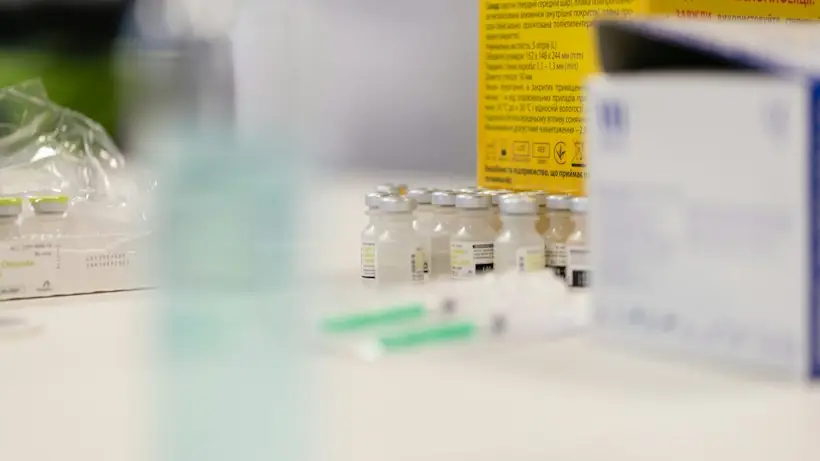
An injection practice gives 20 single-dose drugs a week, and the vials leave an average of $240 in allowed value unused. That's $4,800 a week and $249,600 a year in drug payments that Medicare covers only if the discarded amount is billed with JW and documented in the chart. Leave off the modifier, or the note, and that money is yours to absorb.
Part B drug billing runs on small details. The unit on the HCPCS descriptor, the modifier on the second line, the NDC in the right loop and a sentence in the note about what was thrown away. Each one is easy. Missing any one of them turns a paid claim into a denial or an overpayment.
Here's how Medicare pays for Part B drugs in 2026, how JW and JZ work, where unit conversions go wrong, and why drug claims are about to get more scrutiny than they've had in years.
How Medicare Pays for Part B Drugs: ASP Plus 6% in 2026
Medicare pays for most separately payable Part B drugs at average sales price (ASP) plus 6%. CMS publishes the payment limits quarterly in the ASP pricing files, and your Medicare Administrative Contractor loads them. The statute is section 1847A of the Social Security Act.
The 6% isn't what you actually collect. The 2% sequestration reduction applies to Medicare's 80% share, which brings the effective rate to about ASP plus 4.3% for most drugs. If a drug's payment limit is $26.50 a unit, that's $1.50 over a $25 ASP, but after sequestration Medicare pays about $26.08 a unit including the patient's coinsurance.
That thin margin matters because acquisition costs can sit above ASP for small buyers. A practice that buys at 98% of ASP keeps about 6 points. One that buys at 103% keeps about 1 point, which doesn't cover handling, storage and bad debt on the 20% coinsurance, and discarded amounts it can't bill make it worse.
| Administration code | Service | 2026 Medicare non-facility |
|---|---|---|
| 96372 | Therapeutic injection, subcutaneous or intramuscular | $15.36 |
| 96374 | Therapeutic injection, IV push | $37.74 |
| 96365 | Therapeutic infusion, initial, up to 1 hour | $67.14 |
| 96401 | Chemotherapy injection, subcutaneous or IM | $71.81 |
| 96413 | Chemotherapy infusion, initial, up to 1 hour | $133.27 |
Administration payments come from CMS's October 2026 relative value file at the $33.4009 conversion factor. The drug itself is paid separately from these.
JW and JZ Modifiers: The Discarded Drug Rules
When you open a single-dose vial and discard what's left, Medicare pays for the discarded amount as well as the dose, up to the amount on the label. You report that with the JW modifier. Since July 1, 2023 you also report JZ when nothing was discarded.
| Modifier | Use it when | How to bill |
|---|---|---|
| JW | Part of a single-dose container or single-use package was discarded | Line 1: administered units, no modifier. Line 2: discarded units with JW. |
| JZ | A single-dose drug was given and nothing was discarded | One line with JZ |
Here's the arithmetic. A 100-unit vial, a 60-unit dose and a payment limit of $26.50 a unit. Billed correctly, you report 60 units plus 40 units with JW, for 100 units and $2,650 allowed. Billed without the JW line, you report 60 units and $1,590 allowed, and $1,060 of allowed amount is gone. Bill all 100 units on one line with no JW and you've been paid for 40 units you can't prove you wasted, which is an overpayment.
Neither modifier applies to multi-dose vials. Medicare pays only for what you administered from them, and any remainder isn't payable as waste.
Unit Conversions: The Most Common Part B Drug Error
The HCPCS descriptor defines the billing unit, and it almost never matches how the drug is labeled or ordered. Billing milligrams as units is the single most common drug claim error.
Take infliximab (J1745), which is billed per 10 mg. A 500 mg dose is 50 units, not 500. Bill 500 and you've asked Medicare to pay for ten times what you gave, which gets denied at best and flagged for review at worst. Bill 5 by mistake and you underbill by 90%, and nobody tells you.
The fix is a drug master list. For each drug you stock, record the HCPCS code, the descriptor unit, the NDC, the package size and the conversion. Put it in your charge entry system so the unit calculates from the dose, and never type it by hand.
- Build a drug master. HCPCS, descriptor unit, NDC, vial size and conversion factor for every drug you stock.
- Calculate units from the dose. Let the system divide, and block manual overrides.
- Bill JW on a second line. Administered units on the first line, discarded units on the second.
- Use JZ when nothing was wasted. Don't leave single-dose claims without a modifier.
- Document the discard. Drug, dose given, amount discarded, and the date.
- Pick vial combinations that limit waste. Reviewers ask why a larger vial was opened.
NDC Reporting and Commercial Payer Rules
Medicare doesn't require an NDC on most Part B claims, but Medicaid and many commercial payers do. They want the NDC qualifier N4, the 11-digit NDC, the unit of measure and the quantity, in the drug identification loop on the electronic claim.
The common problems are an NDC in the wrong format (10 digits instead of 11), a quantity that doesn't match the HCPCS units, and an NDC for a package the practice didn't actually use. Two drugs can share a HCPCS code and have different NDCs and prices, so a mismatch can trigger a rate that doesn't match what you billed.
A rule that saves time is to capture the NDC at the point of administration, by scanning the barcode, not at charge entry days later. A practice that scans every vial can match the NDC to inventory, catch expired stock and pull the right NDC onto the claim without a human typing it.
The Discarded Drug Refund Program and Why Your Claims Are Being Watched
The Infrastructure Investment and Jobs Act requires drug manufacturers to refund Medicare for discarded amounts above a threshold. The threshold is at least 10% of total allowed charges for a drug in a quarter, and CMS has set higher percentages for unusual cases, such as 35% for certain hydrogel-reconstituted drugs and 90% for very small volume doses.
CMS builds the refund amounts from claims data, and the JW and JZ modifiers are how it counts waste. CMS's webinar on the program lists a September 1, 2026 report date and a December 31, 2026 payment deadline, with 30 days for manufacturers to dispute the figures. Manufacturers that fail to pay face a civil money penalty of 125% of the assessed refund.
That gives manufacturers a reason to examine the claims data behind their refund bills. If your JW and JZ reporting is inconsistent, or your discards look unusually high for a drug, it can stand out when someone checks. The law also requires CMS to audit Part B claims for refundable single-dose drugs, and the contractor instruction to start periodic audits took effect July 3, 2023.
Part B Drug Billing Audit and OIG Exposure
Drug claims combine high dollars, unit math and modifier rules, which makes them natural audit targets. CMS's fiscal year 2025 improper payment data puts the Part B provider error rate at 8.44%, or $9.62 billion, and insufficient documentation drove roughly 53% of improper payments across Medicare fee-for-service.
For drug claims, documentation means three things: a physician order, a record of the dose given and the amount discarded, and proof the product matched the claim. The Office of Inspector General's Work Plan has included Part B drug payments among its audit topics, and a finding typically ends with a recommendation to recover overpayments inside the reopening period.
Medicare contractors can reopen a claim within 1 year for any reason and within 4 years for good cause. If an internal review finds you've been billing the wrong units or missing JW across a drug line, the 60-day overpayment rule applies from the day you identify it, with a six-year lookback.
What the GLOBE Model Means for Buy-and-Bill
CMS finalized the GLOBE Model on September 30, 2026, a mandatory model that changes how manufacturers rebate certain Part B drugs. For providers, the practical effect is limited. You keep buying and billing the same way, and for patients in the test areas you reduce the coinsurance you charge while Medicare pays more to make up the difference.
Read our update on the GLOBE final rule for the timeline and the claims-processing details. For now, the point for billing teams is that drug data quality is getting more attention, and clean units, modifiers and NDCs are the cheapest protection you have.
Frequently Asked Questions About Part B Drug Billing
When do I use the JW modifier?
Use JW on a separately payable Medicare Part B drug from a single-dose container or single-use package when part of the vial was discarded. Bill the administered dose on one line and the discarded amount on a second line with JW, and document both in the record.
When do I use the JZ modifier?
Use JZ when you gave a drug from a single-dose container and nothing was discarded. CMS required JZ starting July 1, 2023, and contractors began periodic audits on July 3, 2023.
Does Medicare pay for waste from multi-dose vials?
No. Discarded-amount payment applies to single-dose containers and single-use packages. A multi-dose vial is billed only for the amount administered.
What does Medicare pay for a Part B drug in 2026?
The statutory rate is average sales price plus 6%. After the 2% sequestration reduction on Medicare's share, that works out to about ASP plus 4.3% for most drugs.
Related Resources
Free Download: The 10-Point RCM Health Check
The billing gaps most practices don't catch until they show up as denials. Get the checklist: free, no spam.
✓ Got it! Your info is saved: view the checklist now →
We don't share your info. Unsubscribe any time.
Want Your Drug Claims Checked for JW, JZ and Unit Errors?
Rcmaxis audits your buy-and-bill claims for modifier gaps, unit conversions and missing NDCs, then builds the edits that stop them before submission.
Get Your Free Revenue AssessmentReferences
- Centers for Medicare & Medicaid Services. Transmittal 12067, Change Request 13056: New Claims Modifier Requirement for Drugs and Biologicals from a Single-Dose Container or Single-Use Package (June 2, 2023). cms.gov/files/document/r12067cp.pdf
- Centers for Medicare & Medicaid Services. Discarded Drug Refund Program webinar. cms.gov/files/document/discarded-drug-webinar.pdf
- Centers for Medicare & Medicaid Services. Medicare Claims Processing Manual, Chapter 17: Drugs and Biologicals. cms.gov/regulations-and-guidance/guidance/manuals/downloads/clm104c17.pdf
- Centers for Medicare & Medicaid Services. Medicare Part B Drug Average Sales Price (ASP pricing files). cms.gov/medicare/payment/part-b-drugs/asp-pricing-files
- United States Code. 42 U.S.C. 1395w-3a: Use of average sales price payment methodology. law.cornell.edu/uscode/text/42/1395w-3a
- Federal Register. CY 2023 Payment Policies Under the Physician Fee Schedule and Other Changes to Part B Payment and Coverage Policies (final rule, November 18, 2022). federalregister.gov/documents/2022/11/18/2022-23873
- Centers for Medicare & Medicaid Services. PFS Relative Value Files: RVU26D (October 2026 release). cms.gov/medicare/payment/fee-schedules/physician/pfs-relative-value-files/rvu26d
- Centers for Medicare & Medicaid Services. CERT: Medicare fee-for-service error rate program. cms.gov/data-research/monitoring-programs/improper-payment-measurement-programs/...
- Centers for Medicare & Medicaid Services. Fiscal Year 2025 Improper Payments Fact Sheet (January 15, 2026). cms.gov/newsroom/fact-sheets/fiscal-year-2025-improper-payments-fact-sheet
- Office of Inspector General, HHS. Work Plan. oig.hhs.gov/reports/work-plan/