Optometry Billing in 2026
Medical vs Routine Eye Exams, the Refraction Line and the VSP/EyeMed Split
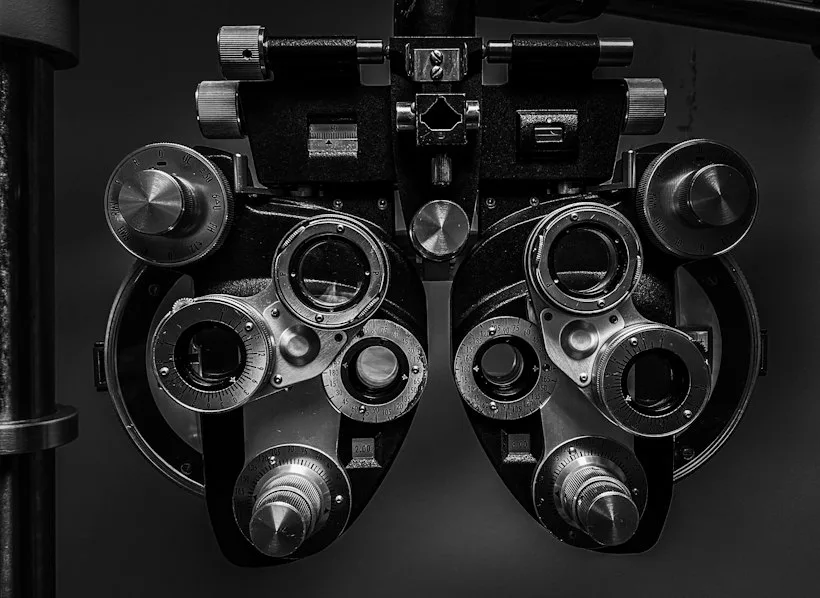
Medicare will pay for a patient's diabetic eye exam in full, then refuse to pay a dime of the roughly $60 line item labeled "refraction" on the very same visit, and it isn't a coverage judgment call. It's the law. Section 1862(a)(7) of the Social Security Act excludes refraction from Medicare Part B outright, and the exclusion holds no matter who performs the test, why they performed it, or what else happened during the exam.
That one line item is a small example of a much bigger problem in optometry billing: almost every visit has a routine side and a medical side, and the two sides get billed to different payers under different rules. Get the split wrong and you either collect nothing for a medically necessary service, or you bill a vision plan for something it was never going to pay, or worse, you bill a medical E/M code the visit doesn't support, which is exactly the pattern a 2025 OIG audit found cost Medicare millions.
Here's how to route the claim correctly, what the refraction line actually requires, how VSP's medical benefit is supposed to work, and what the OIG is now looking for in optometry E/M coding.
Medical vs Routine: The Reason-for-Visit Test
The industry's working rule is simpler than most practices make it: ask why the patient is actually in the chair. A refractive complaint, blurry distance vision, a change in glasses prescription, trouble reading up close, routes to the vision plan. A medical complaint, diabetic eye disease, glaucoma, dry eye, a red or painful eye, routes to medical insurance. When a prior visit generated a follow-up order, like a diabetic retinopathy recheck, that order is the reason for the new visit, not the patient's original complaint.
| Reason for visit | Bill to | Example |
|---|---|---|
| Blurry vision, needs new glasses | Vision plan | Myopia or presbyopia progression |
| Diabetic eye screening | Medical insurance | Diabetic retinopathy exam, often fully covered |
| Red, painful or irritated eye | Medical insurance | Conjunctivitis, corneal abrasion |
| Glaucoma monitoring | Medical insurance | Established glaucoma suspect or diagnosis |
| Annual routine exam, no new findings | Vision plan | Standard refractive check-up |
| Annual routine exam, new medical finding | Medical insurance (that visit) | Macular degeneration found during a routine check |
The messy case is the patient who comes in for glasses and happens to have diabetes. One accepted approach is to split that into two visits so each payer gets a clean, single-reason claim; the alternative, billing both reasons on one encounter, is rarely patient-friendly and even less friendly to the claim. Most vision plans won't accept a refraction-only claim anyway, so if the visit turns medical, don't try to force any part of it onto the vision side.
Coding the Exam: 920xx Eye Codes vs 99xxx E/M Codes
You have two code families available for the exam itself, and you pick one per visit, never both. The ophthalmological exam codes (92002-92014) have their own defined exam elements and new-vs-established patient rules. The E/M codes (99202-99215) follow the standard medical decision-making or time-based E/M framework used across all of medicine.
| Code family | Basis | Typical use |
|---|---|---|
| 92002/92004 | Intermediate/full exam, new patient | Vision plans and some medical payers prefer these for eye-specific visits |
| 92012/92014 | Intermediate/full exam, established patient | Routine and many medical follow-ups |
| 99202-99215 | Medical decision-making or time | Medical complaints where E/M documentation fits better, and most nursing facility visits |
Some payers have a clear preference between the two families, and some optometrists default to whichever pays better without checking whether the documentation actually supports it. That shortcut is exactly what regulators are watching for right now, especially on the E/M side.
The Refraction Line: Why It's Never Covered by Medicare
Refraction (CPT 92015) determines the eye's refractive error, the test that produces a glasses or contact lens prescription. The Medicare Benefit Policy Manual, Chapter 16, Section 90 states plainly that eye examinations for the purpose of prescribing, fitting or changing eyeglasses, and the refraction itself, are excluded, regardless of the practitioner or the reason for the exam.
That exclusion survives even when the refraction happens during an otherwise fully covered visit, like a diabetic eye exam or a post-cataract follow-up. Bundling it into a covered visit doesn't change its status; it's still a direct patient-pay item. Because the exclusion is statutory rather than a medical-necessity determination, you don't need an ABN to bill the patient for it. Commercial and vision-plan coverage for 92015 varies by carrier, so collecting the fee at time of service and refunding if a payer unexpectedly reimburses is a common, lower-risk approach than waiting to find out.
- Quote the refraction fee up front. Patients should know before the exam that it's typically a separate, often non-covered charge.
- Collect at time of service unless you've confirmed coverage. Refund later if a payer pays unexpectedly.
- Never bury 92015 inside a covered exam's charge. Line-item it separately so the EOB reflects the real split.
- Check your MAC's current guidance before changing this workflow. Local billing articles sometimes add detail the national manual doesn't.
Coordinating VSP, EyeMed and Medical Insurance
Vision plans like VSP increasingly carry a medical eye care rider alongside the standard hardware benefit, and that rider is where a lot of coordination mistakes happen. VSP's Essential Medical Eye Care benefit, for example, lists retinal screening for diabetic members as a fully covered service, along with treatment for ongoing conditions like dry eye, diabetic eye disease and glaucoma, routed to medical insurance when the provider is in that medical network, with a standard copay (commonly up to $20) when it isn't.
The coordination logic that matters for your front desk: confirm at check-in whether the patient's vision plan carries a medical rider, and whether your practice is credentialed with the specific medical plan behind it, before assuming the visit routes one way or the other. A diabetic patient's annual screening might be a $0 copay medical claim under the rider, a standard medical-insurance claim if you're not in that specific medical network, or a self-pay problem if nobody checked. Run eligibility for both the vision and medical sides before the exam, not after.
OIG Audit Exposure: What a Recent Finding Means for Your E/M Coding
Optometry hasn't historically drawn the same audit attention as larger specialties, and that's changing. A December 2025 OIG audit, report A-05-24-00009, reviewed high-billing optometrists' E/M claims for Medicare beneficiaries in nursing facilities from 2021 through 2023, and estimated Medicare overpaid the sampled optometrists at least $3 million for high-level E/M services. Every sampled high-level E/M claim line in that audit failed to meet Medicare's requirements.
OIG's explanation wasn't that the codes are inherently wrong for optometry; it's that CMS never built system edits to catch the pattern, and never reviewed these claims the way it reviews other specialties' E/M billing. OIG recommended CMS recover overpayments still inside the four-year reopening window, increase claim reviews and build system edits going forward, with an update expected by May 2026. CMS agreed to some of that and pushed back on the review-and-edits recommendation, which, practically, means the burden of getting this right still sits with the practice, not with a payer system that will catch it for you.
If your optometrists see patients in nursing facilities or assisted living, or bill high-level E/M codes (99214, 99215, or their nursing-facility equivalents) at a rate noticeably above your peers, that's now a documented audit pattern, not a hypothetical one. Review a sample of your own high-level E/M claims against the medical decision-making or time documentation the code actually requires, before a MAC does it for you.
- Pull your own high-level E/M percentage. Compare it to your overall E/M mix and ask whether the documentation supports the pattern.
- Audit nursing facility visits first. That's exactly where the OIG audit found its findings.
- Train on medical decision-making elements, not just time. A borderline level-4 visit needs the chart to show the complexity, not just a long note.
- Keep the four-year reopening window in mind. That's how far back a correction can reach if a pattern is found.
Build the Front-Desk Workflow
Almost every billing mistake in optometry traces back to a decision made at check-in, not at the coding desk. Fix the workflow at the front, and the claims downstream get dramatically cleaner.
Capture the chief complaint in the patient's words, verify both vision and medical eligibility before the exam, and flag any patient with a known chronic eye condition so the visit is pre-routed to medical insurance before they're even in the chair. Build a short script for the refraction fee conversation so it's consistent and never a surprise at checkout.
- Verify both benefits at check-in. Vision and medical eligibility, every visit, not just the first one.
- Flag chronic-condition patients in the system. Diabetic and glaucoma patients should default to a medical routing prompt.
- Standardize the refraction fee script. Quote it before the exam, not at checkout.
- Review code-family selection monthly. Confirm 920xx vs 99xxx choices still match documentation, not just payer preference.
Our guide to ophthalmology billing covers the surgical and medical-retina side of eye care billing in more depth, and our medical necessity documentation guide walks through the chart-note standard that supports a medical routing decision when a payer or auditor asks for it.
Frequently Asked Questions About Optometry Billing
Does Medicare ever pay for a refraction (CPT 92015)?
No. Section 1862(a)(7) of the Social Security Act excludes refraction from Medicare Part B as a matter of statute, not medical necessity, and the Medicare Benefit Policy Manual, Chapter 16, Section 90 confirms the exclusion applies no matter who performs the refraction or why. You can bill the patient directly for it, and you don't need an ABN, because a statutorily excluded service isn't subject to ABN rules.
How do I decide whether to bill a vision plan or medical insurance for an eye exam?
Use the reason for the visit. If the patient came in for a refractive complaint like blurry distance vision needing new glasses, bill the vision plan. If they came in for a medical complaint like diabetic eye disease, glaucoma or dry eye, bill medical insurance. If a routine exam uncovers a new medical diagnosis, that visit becomes a medical claim, not a vision claim, and most vision plans won't accept a refraction-only claim anyway.
Can an optometrist bill 920xx eye codes and 99xxx E/M codes for the same visit?
No, not for a single encounter. You pick one code family per visit based on which set of documentation requirements the encounter actually meets: the eye codes (92002-92014) have their own exam-element requirements, while E/M codes (99202-99215) follow medical decision-making or time-based E/M rules. Billing both sets for one visit is a duplicate-billing problem.
Why is optometry a growing OIG audit target?
A December 2025 OIG audit (report A-05-24-00009) found that Medicare overpaid a sample of high-billing optometrists at least $3 million for high-level E/M nursing facility visits between 2021 and 2023, and every sampled high-level E/M claim line failed Medicare's requirements. OIG blamed weak CMS system edits for letting the pattern continue, and recommended more claim reviews, which puts optometry E/M coding, especially in nursing facilities, under more scrutiny.
Related Resources
Free Download: The 10-Point RCM Health Check
The billing gaps most practices don't catch until they show up as denials. Get the checklist: free, no spam.
✓ Got it! Your info is saved: view the checklist now →
We don't share your info. Unsubscribe any time.
Want Your Vision and Medical Claims Routed Right Every Time?
Rcmaxis builds the eligibility checks and code-family logic that keep your optometry claims clean on both sides of the split.
Get Your Free Revenue AssessmentReferences
- U.S. Department of Health and Human Services, Office of Inspector General. Medicare Overpaid Optometrists for Highest Levels of Evaluation and Management Services Provided to Nursing Facility Residents (A-05-24-00009). oig.hhs.gov/documents/root/11286/A-05-24-00009.pdf
- Social Security Administration. Social Security Act, Section 1862(a)(7): Exclusion of refractive procedures from Medicare coverage. ssa.gov/OP_Home/ssact/title18/1862.htm
- Centers for Medicare & Medicaid Services. Medicare Benefit Policy Manual, Chapter 16, Section 90: Eyeglasses and Refractions. cms.gov/regulations-and-guidance/guidance/manuals/downloads/bp102c16.pdf
- 247wallst.com. Medicare Covered Her Diabetic Eye Exam. The $60 Line Called "Refraction" Is Not Covered, and Eye Exams Usually Have One. 247wallst.com/personal-finance/2026/09/27
- PECAA (Dr. Jason Miller). Coordination of Benefits: Why Make the Effort? pecaa.com/community/blog/billing-coding/coordination-of-benefits-why-make-the-effort
- VSP Vision Care. VSP Signature Plan Benefit Summary (Essential Medical Eye Care). csusm.edu/corp/hr/2026vspsignatureplancoption2benefitsummary.pdf
- American Academy of Professional Coders. Optometry Coding & Billing Alert: Get Ready for OIG Scrutiny of Modifiers and More. aapc.com/codes/coding-newsletters/my-optometry-coding-alert
- U.S. Department of Health and Human Services, Office of Inspector General. Optometrists Billing for Part B Services for Medicare Enrollees in Nursing Facilities (OIG Work Plan item). oig.hhs.gov/reports/work-plan/browse-work-plan-projects