Hospital-at-Home Billing in 2026
Revenue Code 0161, Occurrence Span Code 82, and What the 2025 Waiver Lapse Taught Every RCM Team
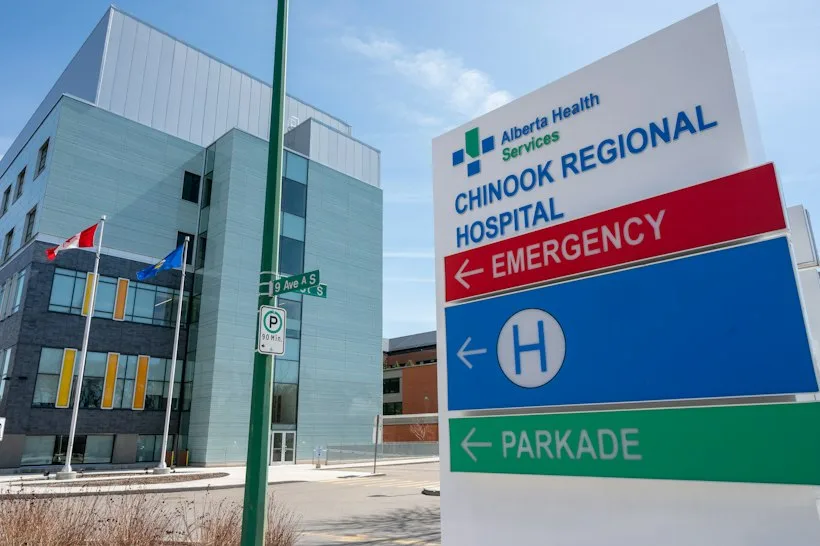
On October 1, 2025, more than 400 hospitals and health systems with an approved CMS waiver got the same instruction at once: discharge every patient receiving acute hospital-level care in their own bed, immediately, and send them back to a hospital. A federal government shutdown had let the Acute Hospital Care at Home waiver lapse, and CMS stopped accepting new waiver requests the same day. A survey of the Hospital at Home Users Group's own members found that 88% of health care organizations said the lapse disrupted their program, and 67% of those saw admissions drop as a direct result.
That whiplash is exactly why hospital-at-home billing deserves a closer look going into 2026. The waiver is no longer the quiet, year-to-year renewal it used to be. It lapsed twice in five months, came back with retroactive payment both times, and then got a five-year extension that finally gives programs some runway. None of that changes how the actual claim gets billed, but it changes how much your revenue cycle team needs to track: waiver status at the program level, not just coding accuracy at the claim level.
Here's exactly how Hospital at Home claims are billed, what the 2025-2026 waiver turbulence actually did to claims in flight, where the program stands now through 2030, and the compliance exposure that sits underneath an inpatient-level claim generated from a patient's living room.
How a Hospital-at-Home Claim Is Actually Billed
Hospital at Home isn't a separate billing system. It's billed as a standard inpatient claim, on the same UB-04 a traditional admission would use, with two specific codes layered on to identify it as care delivered in the home. Per CMS Transmittal R11191OTN (CR 12540), for claims with dates of service on or after July 1, 2022, hospitals report Revenue Code 0161, "Hospital at Home, R&B/Hospital at Home," together with Occurrence Span Code 82, "Hospital at Home Care Dates," which carries the specific date range the patient actually received hospital-level care in the home rather than on the inpatient floor.
| Billing Element | What It Does |
|---|---|
| Revenue Code 0161 | Identifies the claim line as hospital-at-home room and board |
| Occurrence Span Code 82 | Reports the exact date range of in-home acute care on the claim |
| Claim type | Standard inpatient UB-04, same DRG-based payment logic as a floor admission |
| Effective date | Dates of service on or after July 1, 2022 |
Because both codes have to appear together and the span has to reconcile with the patient's actual in-home dates, a claim that's missing either one, or where the occurrence span doesn't match the documented care dates, is the single most common place these claims get rejected before they even reach medical review. Treat RC 0161 and OCS 82 as a matched pair in your claim-scrubber logic, not two independent fields someone fills in from memory.
The 2025-2026 Waiver Lapse: What Actually Happened
The waiver's underlying authority was set to expire September 30, 2025. When the federal government shut down the next day, the authority lapsed with it. CMS guidance was immediate and absolute: every patient currently receiving Hospital at Home care had to be discharged back to the hospital, and the agency stopped accepting new waiver requests entirely. More than 400 hospitals and health systems with approved waivers were affected. Some systems, like OSF Healthcare, discharged their entire in-home census before the deadline hit rather than risk being caught mid-lapse.
The shutdown ran 43 days, the longest in federal history, and ended in mid-November 2025. The stopgap funding law that reopened the government extended the waiver again, this time only through January 30, 2026, and critically, it authorized retroactive payment for hospital-at-home and virtual care services delivered during the lapse. Programs like Hackensack Meridian's resumed within days. Then, as the January 30 deadline approached, a second, brief partial shutdown let the waiver lapse again for a short stretch before Congress passed a longer-term funding package in early February 2026 that finally extended the authority five full years, through September 30, 2030, under Section 6210 of the Consolidated Appropriations Act, 2026 (P.L. 119-75).
The billing lesson from two lapses in five months isn't about coding at all. It's about claim timing discipline: both times the authority lapsed, Congress authorized retroactive payment once it was restored, which means claims for patients treated during a gap weren't lost revenue, they were delayed revenue, as long as the hospital held them correctly instead of writing them off. A revenue cycle team that didn't know retroactive payment was coming, and wrote off or abandoned claims from the lapse window, left real money on the table.
Where the Program Stands Now, Through 2030
CMS confirms directly on its Acute Hospital Care at Home data release fact sheet that Section 6210 of the CAA 2026 extended the initiative's waivers and flexibilities "until September 30, 2030." That's the longest runway the program has had since it launched during the COVID-19 public health emergency, and it's a meaningful signal to hospitals that have been hesitant to build out a program given the year-to-year renewal uncertainty of the last several cycles. It is still, legally, a temporary waiver rather than a permanent Medicare benefit, so the underlying question of whether Congress eventually makes it permanent remains open.
Scale has grown substantially since the program's early years. CMS's own published figures, as of October 2024, put participation at 366 hospitals that had used the waiver and more than 31,000 patients treated in the home setting since the program began. Dr. Bruce Leff, a researcher frequently cited on the program's clinical outcomes, has described its reach as touching roughly 10% of all U.S. hospital systems. CMS has also stated it has not yet published detailed program-integrity or claims-accuracy findings from its own evaluation of the initiative, citing gaps in available Medicaid cost data.
OIG and Audit Exposure: What's Actually Being Watched
As of this writing, neither OIG's active Work Plan nor its published Special Fraud Alerts include an item specifically targeting Hospital at Home billing or claims integrity. That's worth saying plainly rather than inventing a risk that doesn't exist yet: there is no dedicated federal audit program aimed at this billing method today.
That doesn't mean the claims are low-risk. A Hospital at Home claim is still, functionally, an inpatient claim, and it inherits every documentation and medical-necessity standard that applies to a standard admission, on top of the specific RC 0161/OCS 82 matching requirement unique to this program. The clinical bar for admission, physician-level acuity that genuinely requires hospital care, not home health or outpatient monitoring, has to be documented the same way it would for a floor admission, because a reviewer evaluating one of these claims later will be asking the same medical-necessity question CMS asks of any inpatient stay. The occurrence span code itself is also a specific, auditable data point: if the reported care dates don't match the clinical documentation of daily nurse check-ins and physician oversight, that's a mismatch a payer can flag on its own without needing a dedicated audit program to find it.
Building a Hospital-at-Home Billing Workflow That Survives the Next Lapse
Given the program's track record, treat waiver-status monitoring as its own ongoing task, not a one-time enrollment step. A single CMS 1135 individual waiver approval doesn't mean the underlying authority is permanent; it means your hospital is cleared to bill under the program for as long as the authority itself is active, and that authority has now lapsed twice in one funding cycle. Assign someone to track the program's statutory expiration date the same way your team already tracks payer contract renewal dates, and build a documented hold-and-resubmit process for claims in flight if the authority lapses again before 2030.
On the clinical-documentation side, make sure daily RN check-ins, the on-demand audio or video connection requirement, and physician oversight are all logged with timestamps that line up with the OCS 82 date span on the claim, not just summarized after the fact. That alignment is what protects the claim if it's ever reviewed, waiver-specific audit program or not.
- Pair RC 0161 and OCS 82 in your claim scrubber. Never let one go out without the other, and validate the span dates against documented care dates before submission.
- Verify each commercial and Medicaid payer's own hospital-at-home policy. Don't assume Medicare's coding rules apply just because the patient has other coverage.
- Hold, don't write off, claims from any future lapse period. Both 2025-2026 lapses were followed by retroactive payment once the waiver was reinstated.
- Track the waiver's statutory authority like a contract renewal date. September 30, 2030 is the current deadline, not a guarantee.
Our home health billing guide covers the separate, lower-acuity home care benefit this program is often confused with, and our medical billing compliance guide walks through the inpatient medical-necessity documentation standards that a Hospital at Home claim has to meet just like any other admission.
Frequently Asked Questions About Hospital-at-Home Billing
Is the Hospital at Home waiver permanent now?
No. Section 6210 of the Consolidated Appropriations Act, 2026 (P.L. 119-75) extended the Acute Hospital Care at Home waiver authority through September 30, 2030, a five-year extension, but it is still a temporary waiver, not a permanent statutory benefit. CMS confirms this extension on its official Acute Hospital Care at Home data release fact sheet.
What revenue code and occurrence span code are used to bill Hospital at Home?
Claims are billed as inpatient using Revenue Code 0161 together with Occurrence Span Code 82, which reports the specific date range the patient received hospital-level care at home. This applies to claims with dates of service on or after July 1, 2022, per CMS Transmittal R11191OTN (CR 12540). A claim missing either code risks a billing edit rejection.
What happened to claims for patients treated during the 2025 waiver lapse?
When the federal government shutdown began on October 1, 2025, the waiver lapsed and CMS directed hospitals to discharge every Hospital at Home patient back to a hospital bed immediately, and stopped accepting new waiver requests. When the 43-day shutdown ended in mid-November 2025, the stopgap funding law that reinstated the waiver through January 30, 2026 also authorized retroactive payment for virtual care and hospital-at-home services delivered during the lapse.
Related Resources
Free Download: The 10-Point RCM Health Check
The billing gaps most practices don't catch until they show up as denials. Get the checklist: free, no spam.
✓ Got it! Your info is saved: view the checklist now →
We don't share your info. Unsubscribe any time.
Running a Hospital-at-Home Program?
Rcmaxis builds RC 0161/OCS 82 claim validation, waiver-status tracking and payer-specific policy checks into your revenue cycle, so a lapse doesn't mean lost revenue.
Get Your Free Revenue AssessmentReferences
- Centers for Medicare & Medicaid Services. Acute Hospital Care at Home Data Release Fact Sheet. cms.gov/newsroom/fact-sheets/acute-hospital-care-home-data-release-fact-sheet-0
- Centers for Medicare & Medicaid Services. Transmittal R11191OTN: Hospital at Home Billing Instructions (CR 12540). cms.gov/regulations-and-guidance/guidance/transmittals/transmittals/r11191otn
- Centers for Medicare & Medicaid Services. Lessons from CMS's Acute Hospital Care at Home Initiative. cms.gov/blog/lessons-cms-acute-hospital-care-home-initiative
- U.S. Government Publishing Office. Consolidated Appropriations Act, 2026, Public Law 119-75, Section 6210. congress.gov/bill/119th-congress
- TechTarget. How OSF Healthcare Navigates Hospital at Home During Shutdown. techtarget.com/virtualhealthcare/feature/osf-healthcare-hospital-at-home-shutdown
- Home Health Care News. Government Shutdown Fallout Hits Hospital at Home Providers, Admissions Drop. homehealthcarenews.com/government-shutdown-fallout-hits-hospital-at-home
- Home Health Care News. Government Shutdown Halts Telehealth Flexibilities, Hospital at Home Waiver, Threatening Home Health Industry. homehealthcarenews.com/government-shutdown-halts-telehealth-flexibilities
- American Organization for Nursing Leadership (AONL). Medicare Telehealth, Hospital-at-Home Payments Extended in Funding Bill. aonl.org/news/medicare-telehealth-hospital-at-home-payments-extended