Correctional Healthcare Billing in 2026: Medicaid's Inmate Exclusion Rule
The 24-Hour Inpatient Exception That Lets Hospitals Actually Bill Medicaid for Correctional Facility Patients, and Why So Many Miss It
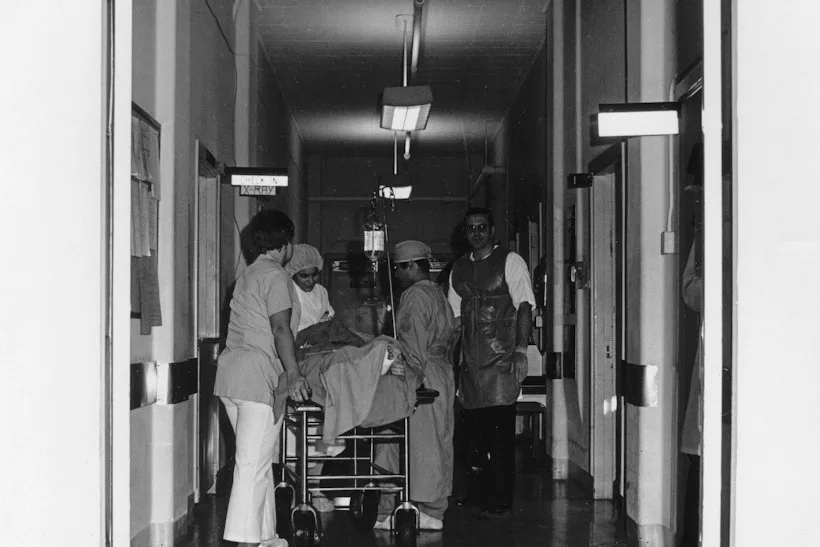
About 10 million people move through local jails every year, and roughly 90% of people entering a county jail have no health insurance at the point of booking, according to GAO's own research on this population. Federal law bars Medicaid matching funds for almost all of their care while they're incarcerated, full stop, regardless of whether they're actually Medicaid-eligible. But there's one narrow pathway where the federal government does pick up its share: an inpatient hospital stay crossing a 24-hour threshold. It's a rule most correctional health vendors and hospital billing teams either don't know exists or apply incorrectly in one direction or the other, and both mistakes cost real money.
About 5% or less of the inmate population is likely to have an inpatient stay in any given period, according to CRS's analysis of this rule. That sounds small until you multiply it across a 10-million-person annual jail population and realize that's still a meaningful volume of inpatient claims sitting in a gray zone where billing teams routinely either leave reimbursement unclaimed or, in the opposite error, bill Medicaid for excluded outpatient care that should never have gone to the program in the first place.
The Medicaid Inmate Exclusion Rule, and Why It Isn't About Eligibility
Section 1905(a)(29)(A) of the Social Security Act, implemented at 42 CFR 435.1009, bars federal Medicaid matching funds for services furnished to an "inmate of a public institution." The critical detail billing teams miss is that this rule tracks inmate status, not Medicaid eligibility. A person can be fully Medicaid-eligible by every normal measure, income, residency, category, and still have zero federal funds available for their care, purely because of where they're living when the service is furnished. States remain responsible for correctional healthcare costs on their own, without federal matching, for the entire population this rule covers.
42 CFR 435.1010 defines an inmate as a person living in a public institution, meaning a facility under the responsibility or administrative control of a governmental unit. There are real carve-outs within that definition worth knowing: someone with genuine freedom of movement, such as a work-release arrangement, generally isn't treated as an inmate under this rule, and someone temporarily in a public institution pending other placement, or enrolled in a public educational or vocational program, falls outside it too. For the vast majority of jail and prison populations, though, the exclusion applies cleanly, and the only question that matters for billing is what happens when that person needs inpatient hospital care.
The 24-Hour Inpatient Exception: The One Pathway That's Actually Billable
42 USC 1396d(a)(31)(A) and 42 CFR 435.1010 carve out the one real exception to the exclusion rule: once a Medicaid-eligible inmate is admitted as an inpatient to a hospital or other qualifying medical institution, CMS guidance recognizes hospitals, nursing facilities, juvenile psychiatric facilities and intermediate care facilities, for a stay of 24 hours or more, federal matching funds become available for that inpatient stay specifically. During that period, the regulation treats the person as if they were not an inmate at all for Medicaid purposes. Outpatient visits, emergency department treatment that doesn't convert to an admission, and any stay that stays under the 24-hour mark remain categorically excluded; there's no partial credit and no appeal path that gets around the threshold itself.
The federal match available here isn't trivial. States receive at least 50% federal reimbursement for most Medicaid populations, and up to 90% for the ACA expansion adult population specifically, which is exactly the group most likely to be cycling through county jails. For a hospital that regularly treats patients transported from a correctional facility, correctly identifying and billing qualifying inpatient stays is the difference between the facility absorbing the full cost itself and recovering the large majority of it through the state Medicaid program.
| Scenario | Medicaid Billable? |
|---|---|
| Outpatient ED visit, no admission | No: excluded regardless of length of visit |
| Inpatient admission, under 24 hours | No: threshold not met |
| Inpatient admission, 24 hours or more | Yes: federal matching funds available for the inpatient stay |
| Work-release status with freedom of movement | Generally not treated as an inmate; standard Medicaid rules apply |
Why So Many Hospitals Miss This Reimbursement
Most states terminate or suspend an inmate's Medicaid enrollment at the point of booking, which means the hospital frequently can't just bill against an active Medicaid ID the way it would for any other patient. Several states, New Jersey among them, address this with a presumptive eligibility process specifically built for hospitalized inmates, with coverage established back to the admission date once the application is filed, typically within 72 hours of admission. A 2016 Pew analysis of this landscape found that retroactive coverage is often available going back up to three months from when treatment was received, which gives billing teams a real window to correct a claim that was initially submitted as self-pay or written off entirely.
The practical failure mode runs in a predictable direction: billing staff see "correctional facility" on an intake record, default to treating the entire stay as excluded, and never check whether the admission actually crossed 24 hours or whether a presumptive eligibility application was ever filed. That default is understandable given how aggressively the base exclusion rule is worded, but it means hospitals are leaving the one pathway that is billable unclaimed precisely because the surrounding rule is so categorically restrictive. The fix isn't complicated: any patient transported from a correctional facility who gets admitted, not just evaluated, should trigger an automatic check of admission and discharge timestamps against the 24-hour threshold, every time, before the claim gets coded as self-pay.
What Documentation an Inpatient Exception Claim Actually Needs
Because this isn't a standard prior authorization process, the "approval" here is really a documentation and timing standard your billing team controls directly. The claim needs admission and discharge timestamps clearly establishing the stay crossed 24 hours, not just a date of service without times attached. It needs the correctional facility's transport and custody documentation showing the patient was in custody at the time of service, since that's what establishes the inmate-status question in the first place. And where the patient's Medicaid enrollment was terminated or suspended at booking, it needs a presumptive eligibility application or new enrollment request filed within your state's window, generally within the first 72 hours of admission, with the retroactive coverage date tied back to the admission itself.
When a claim fails this standard, the most common reason isn't a clinical dispute; it's a missing timestamp or a presumptive eligibility application that was never filed because nobody flagged the patient as correctional-facility-sourced until after the relevant filing window had already closed. Build the check into intake, not into billing after the fact. A patient flagged at admission as transported from a correctional facility should trigger the presumptive eligibility conversation immediately, not days later when the chart lands on a biller's desk.
- Flag every correctional-facility-sourced patient at intake, not at billing. The presumptive eligibility filing window starts running from admission, generally within 72 hours in states that offer it.
- Track admission and discharge timestamps precisely. The 24-hour threshold is the entire billing determination; there's no partial credit for 20 hours.
- Audit your last 12 months of correctional-facility-sourced claims for both failure modes. Unclaimed qualifying inpatient stays, and incorrectly billed outpatient or sub-24-hour stays.
- Check your state's specific presumptive eligibility and retroactive coverage rules. Some states allow coverage back to admission date; most have their own specific filing mechanics worth confirming directly.
Our hospital outpatient billing guide covers the broader POS and claims-type distinctions this rule depends on, and our coordination of benefits guide walks through the enrollment-status verification habits that catch this kind of gap before a claim gets submitted incorrectly.
Treating Patients From Correctional Facilities?
Rcmaxis builds the intake flags and claim-review checks that catch the 24-hour inpatient exception, in both directions, before revenue gets left unclaimed or a claim gets recouped.
Get Your Free Revenue AssessmentFrequently Asked Questions About Correctional Healthcare Billing
Can a hospital bill Medicaid for treating an inmate?
Only under the inpatient exception. Federal Medicaid matching funds are generally barred for people who are inmates of a public institution, under Section 1905(a)(29)(A) of the Social Security Act and 42 CFR 435.1009. But 42 USC 1396d(a)(31)(A) and 42 CFR 435.1010 carve out an exception: once a Medicaid-eligible inmate is admitted as an inpatient to a hospital or other qualifying medical institution for 24 hours or more, federal matching funds become available for that inpatient stay. Outpatient care and stays under 24 hours remain excluded.
What counts as an inmate of a public institution under Medicaid?
Someone living in a facility under the responsibility or administrative control of a governmental unit, which covers state prisons, local jails and contracted correctional facilities. A person is not considered an inmate if they have freedom of movement, such as a work-release arrangement, or if they are in a public educational or vocational institution, or temporarily in a public institution pending other arrangements.
Why do hospitals miss Medicaid reimbursement for inmate inpatient care?
Mainly because billing staff default to treating every patient tied to a correctional facility as categorically excluded, without checking whether the 24-hour inpatient threshold was actually met. States also typically terminate or suspend an inmate's Medicaid enrollment at booking, so the hospital has to initiate presumptive eligibility or a new application for the inpatient stay itself, a step that gets missed when nobody on the billing team is specifically watching for it.
Related Resources
Free Download: The 10-Point RCM Health Check
The billing gaps most practices don't catch until they show up as denials. Get the checklist: free, no spam.
✓ Got it! Your info is saved: view the checklist now →
We don't share your info. Unsubscribe any time.
References
- Congressional Research Service. Medicaid and Inmates of Public Institutions (IF10285). everycrsreport.com/reports/IF10285.html
- U.S. Government Accountability Office. Medicaid: Information on Inmate Health Care Coverage (GAO-14-752R). gao.gov/products/gao-14-752r
- Cornell Law School, Legal Information Institute. 42 CFR 435.1009, Inmates of Public Institutions. law.cornell.edu/cfr/text/42/435.1009
- Cornell Law School, Legal Information Institute. 42 CFR 435.1010, Definitions Relating to Inmates of Public Institutions. law.cornell.edu/cfr/text/42/435.1010
- Congressional Research Service. Medicaid and Incarcerated Individuals (IF11830). everycrsreport.com/reports/IF11830.html
- The Pew Charitable Trusts. How and When Medicaid Covers People Under Correctional Supervision. prisonlegalnews.org/news/publications/medicaid-correctional-supervision-pew-2016
- New Jersey Department of Human Services. NJ FamilyCare and Hospitalized Inmates, Presumptive Eligibility FAQ. nj.gov/humanservices/dmahs/NJ_FamilyCare_PE_for_Inmates_FAQs.pdf