Acupuncture Billing for Chronic Low Back Pain in 2026
NCD 30.3.3 Visit Caps, CPT 97810-97814 Reimbursement, and the Credential Rule That Trips Up Most Practices
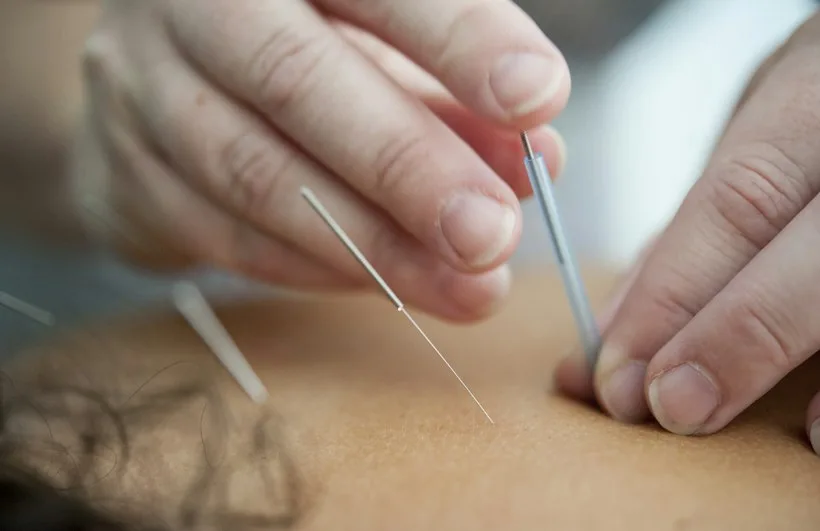
Medicare pays $48.10 for a single 15-minute acupuncture session billed under CPT 97810, and it covers that session for exactly one diagnosis in the entire fee schedule: chronic low back pain. Nothing else qualifies. Bill the wrong provider type, stack visits past the cap without documenting improvement, or attach a dry-needling code on the same date, and the claim denies automatically, often without a clear explanation on the remit unless your team already knows the rule it tripped.
Acupuncture is one of the narrowest coverage determinations in the entire Medicare program, and that narrowness is exactly what makes it a billing minefield. The condition definition is specific, the visit caps are hard stops, and the credential requirement for who can actually furnish the service catches more practices than any of the clinical rules do. Here's what National Coverage Determination 30.3.3 actually requires, what the four CPT codes pay in 2026, where commercial payers diverge from Medicare, and the denial patterns worth auditing before they become a trend.
What NCD 30.3.3 Actually Covers
Medicare's coverage is limited to chronic low back pain as CMS specifically defines it: pain lasting 12 weeks or longer, with no identifiable systemic cause, meaning it isn't associated with metastatic, inflammatory, or infectious disease, and it isn't associated with surgery or pregnancy. That's a narrower definition than "chronic low back pain" as a clinician might use the term day to day, and documentation needs to affirmatively support each of those exclusions, not just note a pain duration.
| Coverage Element | Requirement |
|---|---|
| Qualifying diagnosis | Chronic low back pain only; 12+ weeks, nonspecific, no systemic cause, not surgical or pregnancy-related |
| Initial visit allowance | Up to 12 visits in 90 days |
| Extension | 8 additional sessions, only if the patient shows documented improvement |
| Annual hard cap | 20 acupuncture treatments per year, maximum |
| Stop condition | Treatment must stop if the patient isn't improving or is regressing |
The Credential Rule Most Practices Get Wrong
Physicians may furnish acupuncture under NCD 30.3.3 per their applicable state requirements, and that part surprises nobody. What catches practices off guard is the rule for everyone else. A physician assistant, nurse practitioner, or clinical nurse specialist can bill Medicare acupuncture claims only if that specific individual separately holds a master's or doctoral degree in acupuncture or Oriental Medicine from a school accredited by the Accreditation Commission for Acupuncture and Oriental Medicine, plus a current, full, active, and unrestricted state acupuncture license. That's a distinct credential from their standard clinical license, not something their NP or PA license covers by extension.
The same standard applies to auxiliary personnel furnishing the service under physician supervision, who additionally need to meet the supervision level required under 42 CFR §§ 410.26 and 410.27, the general incident-to regulations. A practice that assumes any employed PA or NP can bill acupuncture under the same incident-to logic that covers routine E/M visits is working from the wrong rule entirely; without the separate ACAOM-accredited degree and license on file for that specific clinician, the claim isn't billable, regardless of how routine incident-to billing works for everything else that clinician does.
CPT Codes and 2026 Medicare Reimbursement
Four CPT codes cover the service, split by whether electrical stimulation is used and whether it's the initial 15 minutes or an additional unit. Units are billed based on documented one-on-one time with the patient, in 15-minute increments.
| CPT Code | Description | 2026 Non-Facility Rate | 2026 Facility Rate |
|---|---|---|---|
| 97810 | Acupuncture, without electrical stimulation, initial 15 minutes | $48.10 | $27.39 |
| 97811 | Each additional 15 minutes, without stimulation (add-on) | $28.39 | $20.71 |
| 97813 | Acupuncture, with electrical stimulation, initial 15 minutes | $56.45 | $33.40 |
| 97814 | Each additional 15 minutes, with stimulation (add-on) | $28.72 | $21.04 |
Rates are calculated from the CMS 2026 Medicare Physician Fee Schedule RVU file (PPRRVU2026) using total RVUs multiplied by the $33.4009 conversion factor. A single 15-minute session billed as 97810 alone pays $48.10 non-facility; a 30-minute session billed as 97810 plus 97811 pays $76.49. At the basic 97810 rate, a patient who uses the full 20-visit annual allowance generates roughly $962 in Medicare reimbursement per year, non-facility, before accounting for any electrical-stimulation sessions billed at the higher 97813/97814 rate.
Two related HCPCS codes, 20560 and 20561, cover dry needling without injection, and they matter here specifically because of how they interact with the acupuncture codes, covered next.
The Dry-Needling Conflict That Auto-Denies Claims
HCPCS codes 20560 (dry needling, one or two muscles) and 20561 (three or more muscles) are a separate code set from acupuncture, and CMS treats them as mutually exclusive with the acupuncture codes on the same date of service for the same patient. A frequency edit introduced by CR13288 means a claim billing both an acupuncture code (97810, 97811, 97813, or 97814) and a dry-needling code (20560 or 20561) for the same encounter denies automatically. If your practice offers both services, same-day scheduling has to route the claim through one code family or the other, never both.
| HCPCS Code | Description | 2026 Non-Facility Rate |
|---|---|---|
| 20560 | Needle insertion without injection, 1-2 muscles | $24.72 |
| 20561 | Needle insertion without injection, 3 or more muscles | $38.08 |
Commercial Coverage Is Broader, and Differently Structured
Commercial payers aren't bound by Medicare's single-diagnosis restriction, and coverage can look meaningfully different. Aetna's clinical policy bulletin on acupuncture, for example, extends coverage to chronic neck pain, chronic headache, low back pain, nausea related to pregnancy, osteoarthritis knee and hip pain as an adjunctive therapy, post-operative and chemotherapy-related nausea, post-operative dental pain, and temporomandibular disorder, using the same 97810/97811/97813/97814 code set Medicare uses. Instead of a fixed visit cap, Aetna applies a four-week clinical-benefit reevaluation standard: if the patient hasn't shown meaningful benefit after four weeks of treatment, the plan expects the treatment plan to be reevaluated rather than continued by default. Notably, Aetna's policy explicitly does not cover dry needling (20560/20561) for these same indications, the opposite of Medicare's cLBP-specific allowance for both code families.
The practical takeaway: never assume a commercial plan's acupuncture coverage mirrors Medicare's, in either direction. Verify each payer's specific covered-diagnosis list, visit-limit or reevaluation standard, and dry-needling coverage stance before building a treatment plan around assumed coverage, and keep documentation of functional improvement on hand regardless of payer, since continued-benefit documentation is the recurring theme across every policy reviewed here.
Where This Billing Pattern Breaks Down
- Visit cap exceeded without improvement documentation. The 8-visit extension past 12 requires a documented functional change, not a continuation note.
- Midlevel billing without the ACAOM credential on file. An NP or PA license alone doesn't authorize acupuncture billing; the separate acupuncture degree and license must exist and be documented.
- Acupuncture and dry needling billed same-day. CR13288's frequency edit denies this combination automatically; route each encounter to one code family.
- Commercial continuation past the reevaluation window without documented benefit. Payers like Aetna expect a reevaluation at the four-week mark, not indefinite continuation on the original plan.
No Medicare-specific OIG audit of acupuncture billing has been published as of this writing, so this isn't a documented federal enforcement target the way some other services are. The closest related federal program-integrity finding comes from a different program entirely: a VA Office of Inspector General review found roughly $136.7 million in improper payments across combined acupuncture and chiropractic claims in the VA system for fiscal years 2018 and 2019. That's a VA finding, not a Medicare one, and shouldn't be cited as evidence of Medicare-specific risk, but it's a useful signal that needle-based therapy billing draws scrutiny in federal programs generally when credentialing and documentation controls are weak.
Building a Compliant Acupuncture Billing Workflow
Start with credentialing: before any non-physician clinician bills a single acupuncture claim, confirm their ACAOM-accredited degree and current state acupuncture license are on file, documented separately from their primary clinical credential, and re-verify at license renewal. Build your visit-tracking system around the 12-visit/90-day structure with a hard stop at 20 per year, and require a documented functional-improvement note before any claim past visit 12 goes out. For practices offering both acupuncture and dry needling, add a scheduling or coding rule that prevents both code families from appearing on the same date of service for the same patient.
- Verify the ACAOM credential before the first claim, not after a denial. Document it in the provider's credentialing file alongside their standard license.
- Track visits against the 12/90-day structure with a 20/year ceiling. Flag any claim approaching visit 12 for an improvement-documentation check.
- Separate acupuncture and dry-needling scheduling. Never let both code families land on the same date of service.
- Confirm each commercial payer's own coverage list and reevaluation standard. Don't assume Medicare's single-diagnosis rule, or lack of one, applies elsewhere.
Our chiropractic billing guide covers the related non-physician manual-therapy billing rules this often sits alongside, and our medical billing compliance guide walks through the incident-to and credentialing documentation standards that apply across these narrow coverage determinations.
Frequently Asked Questions About Acupuncture Billing
How many acupuncture visits does Medicare cover for low back pain?
Up to 12 visits in 90 days. If the patient demonstrates improvement, Medicare covers an additional 8 sessions, for a hard cap of 20 acupuncture treatments per year. Treatment must stop if the patient isn't improving or is regressing. Source: CMS National Coverage Determination 30.3.3.
Can our nurse practitioner bill Medicare acupuncture claims incident-to?
Only if that specific NP, PA, or clinical nurse specialist independently holds a master's or doctoral degree in acupuncture or Oriental Medicine from an ACAOM-accredited school and a current, full, active, unrestricted state acupuncture license, separate from their standard NP, PA, or CNS license. Auxiliary personnel furnishing acupuncture need the same credential, plus the physician supervision level required under 42 CFR 410.26 and 410.27.
Can a practice bill acupuncture and dry needling on the same date of service?
No. CMS counts a single acupuncture session as either the acupuncture code set (97810, 97811, 97813, 97814) or a dry-needling code (20560 or 20561), never both, on the same date for the same patient. A frequency edit introduced by CR13288 denies claims that combine them.
Related Resources
Free Download: The 10-Point RCM Health Check
The billing gaps most practices don't catch until they show up as denials. Get the checklist: free, no spam.
✓ Got it! Your info is saved: view the checklist now →
We don't share your info. Unsubscribe any time.
Getting Denied on Acupuncture Claims?
Rcmaxis verifies ACAOM credentials, tracks visit caps against documented improvement, and keeps acupuncture and dry-needling claims from colliding on the same date of service.
Get Your Free Revenue AssessmentReferences
- Centers for Medicare & Medicaid Services. MM13288: National Coverage Determination 30.3.3, Acupuncture for Chronic Low Back Pain. cms.gov/files/document/mm13288-ncd-30.3.3-acupuncture-clbp
- Centers for Medicare & Medicaid Services. National Coverage Determination 30.3.3, Medicare Coverage Database. cms.gov/medicare-coverage-database/view/ncd.aspx
- Centers for Medicare & Medicaid Services. 2026 Medicare Physician Fee Schedule RVU File (rvu26d.zip). cms.gov/files/zip/rvu26d.zip
- Code of Federal Regulations. 42 CFR §§ 410.26-410.27: Incident-To Services and Supervision Requirements. ecfr.gov/current/title-42/part-410
- Aetna Inc. Clinical Policy Bulletin 0135: Acupuncture. aetna.com/cpb/medical/data/100_199/0135.html
- U.S. Department of Veterans Affairs, Office of Inspector General. Review of Veterans Health Administration Acupuncture and Chiropractic Care Claims. va.gov/oig
- Accreditation Commission for Acupuncture and Oriental Medicine (ACAOM). Accredited and Candidate Programs. acaom.org